The event was the third in a series of symposia exploring the past, present and future of public opinion research, through the 80 years of the Minnesota Poll

By George Bagrov Minnesota Journalism Center
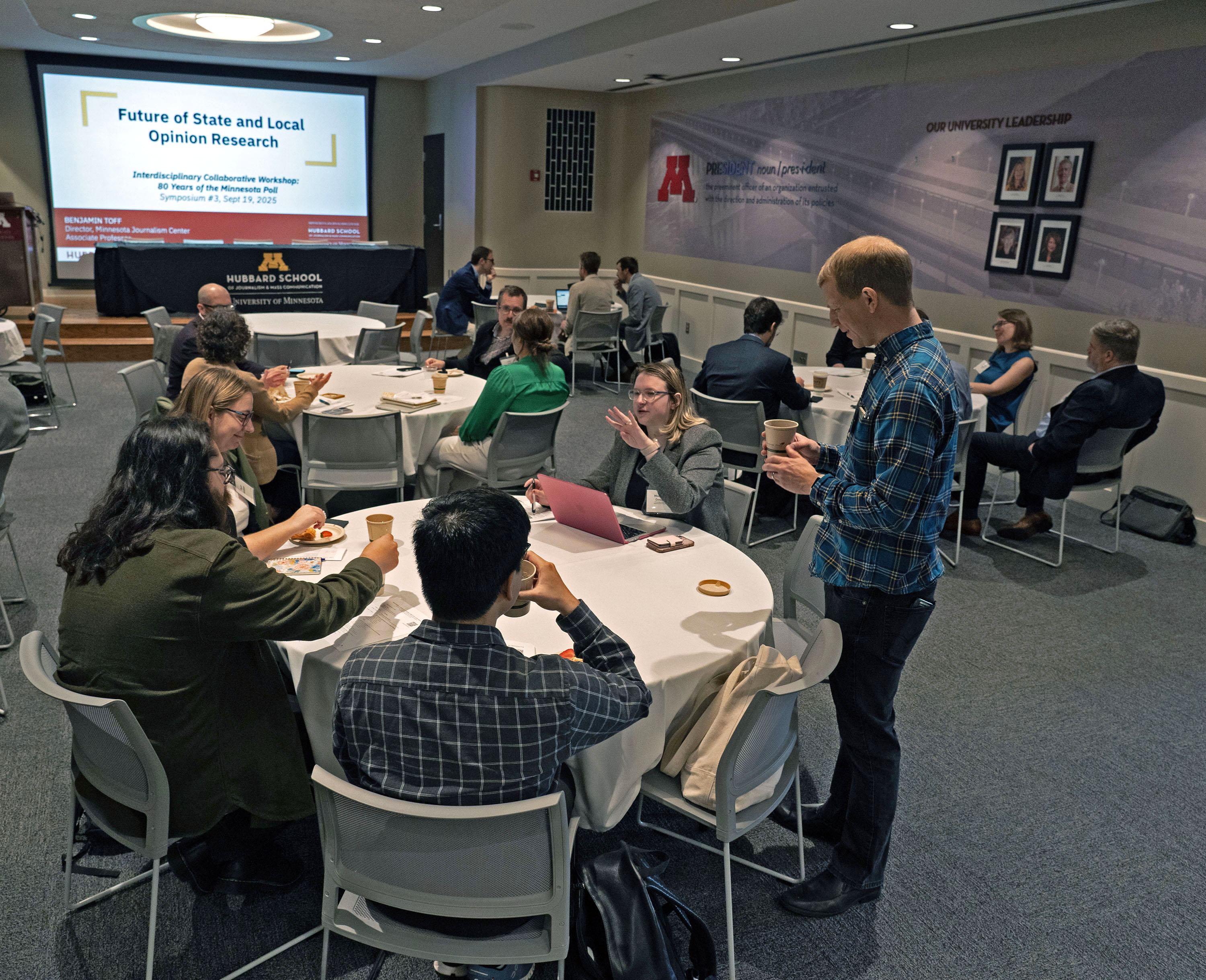
The Minnesota Journalism Center's third and final symposium marking 80 years of the Minnesota Poll brought local journalists together with a range of scholars and leading experts in the field of public opinion research to consider the future of state and local opinion research. The event, held on the University of Minnesota's campus Sept. 19, included three panels addressing traditional and emerging methods; applications to the study of news audiences and journalism; and unique challenges and opportunities facing Minnesota.
Minnesota Journalism Center director Benjamin Toff opened the symposium by emphasizing the "rich history of storytelling" coming out of the Minnesota Poll, which has captured the attitudes and experiences of the people and culture in the state for over nine decades.
Interdisciplinary Collaborative Workshop: 80 Years of the Minnesota Poll
The symposia series — supported by the College of Liberal Arts' Interdisciplinary Collaborative Workshop — began in November 2024 with a gathering centered on the poll’s history in Minnesota and the launch of an online portal created in partnership with Cornell's Roper Center making the poll’s data searchable and accessible to journalists and researchers. The vibrant discussion continued in May with a second symposium, this time on the role of journalism in covering public opinion.
The first roundtable at September's symposium focused on research methods and included speakers from across industry and academia who addressed aspects of methodology that are unique to local and state-level research. Several speakers discussed challenges relating to the accuracy of local polling including coverage error and selection biases especially involving populations outside of major metro areas.
As Peter Enns, professor at Cornell University and co-founder to the polling firm Verasight put it, “We need to test new strategies for representativeness” and to “reach people where they are.” Brad Jones, Senior Research Director at YouGov, reviewed his own organization’s state-level data in Minnesota and noted that a correctly conducted state poll is a paramount stepping stone to ensuring the accuracy of national research; otherwise, a national poll becomes an “accumulation of errors in states.”
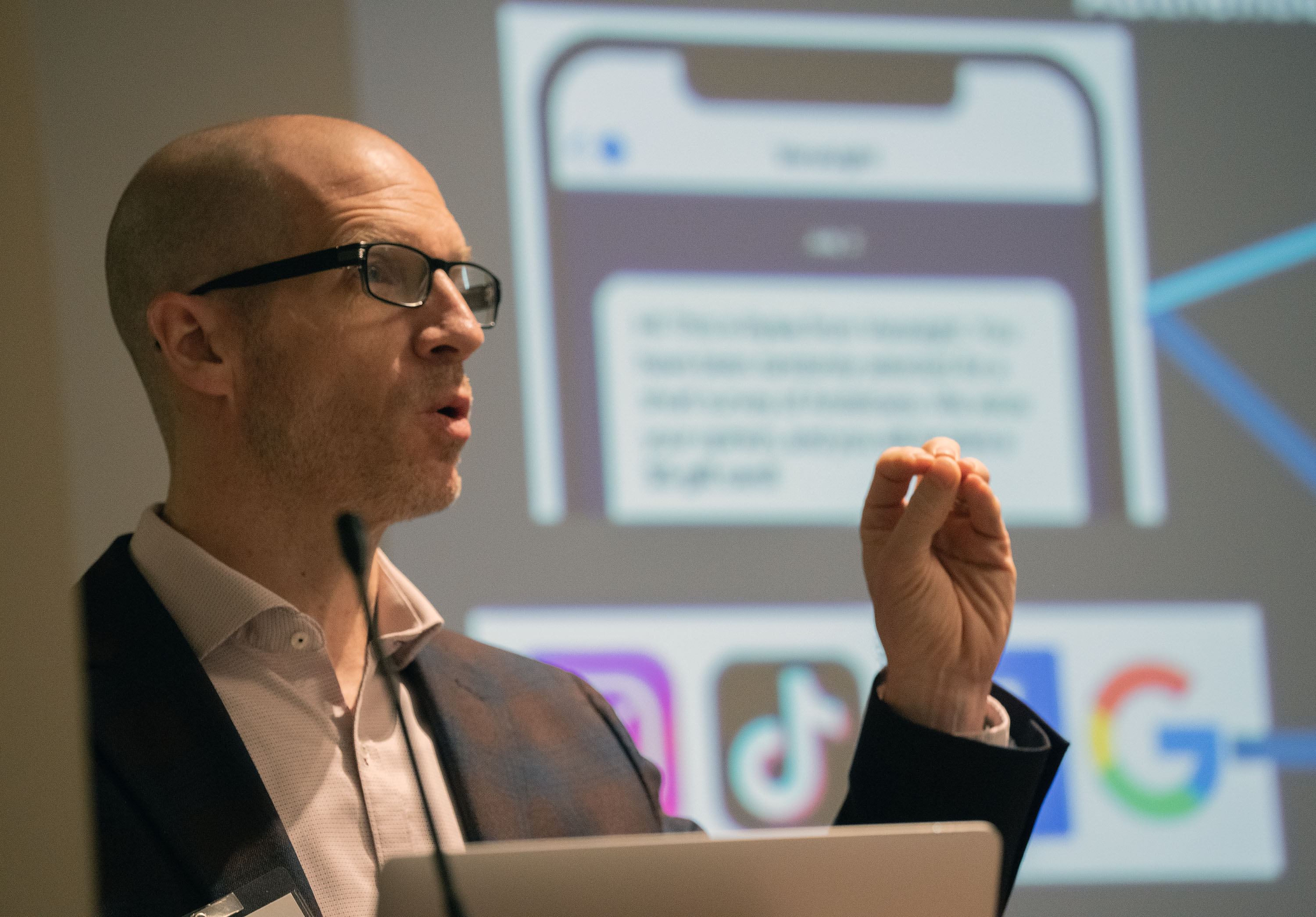
Mark Watts, Vice President of Client Services at NORC’s AmeriSpeak, also spoke about the difference between probability-based surveys and non-probability panel-based (including YouGov and Verasight), arguing that errors are more likely to occur in the latter, especially outside of a election-related topics where researchers can weight to past vote choices and partisanship.
Although establishing probability-based panels is resource-intensive at the state and local level, Watts noted that “once you have it, it is a phenomenal resource to use” and can serve as a “public utility” for a wide range of research applications. Presenters collectively agreed that there may be opportunities for local institutions to work together in a collaborative way by partnering with national panel providers whose ready-to-use infrastructure can power state-level research.
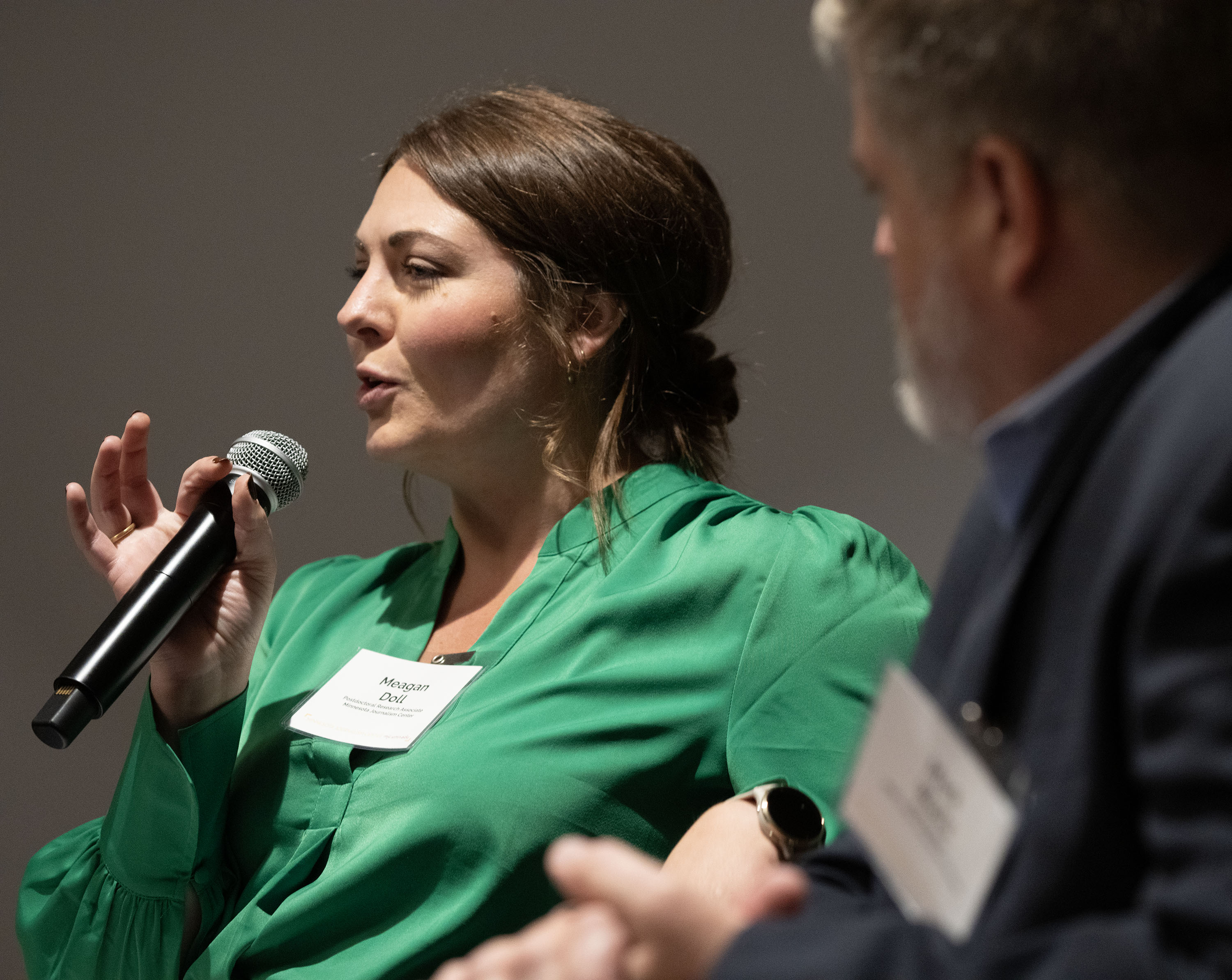
Continuing the discussion of emerging methods, Meagan Doll, a post-doctoral researcher at the University of Minnesota, highlighted the value of mixed-method approaches as it relates to understanding and surfacing locally specific concerns, drawing on the powerful combination of in-depth interviews and surveys. Doll described some of her previous experiences conducting research in Uganda where Doll demonstrated how inductive, qualitative interview responses were “critical and meaningful” both for designing survey questions and making sense of responses afterward.
Similarly, Josef Woldense, an assistant professor in the university's Department of African American & African Studies, described an ongoing project that seeks to develop a framework for conceptualizing representativeness from interview-based data often collected using snowball sampling methods. Woldense underscored the value of interviews as an opportunity to gain insight into a “world” that is often unknown to researchers in advance but which is also often partial and incomplete.

Following the first panel on methodology, a second panel focused on applications of local and state-level opinion research involving the study of news audiences and journalism.
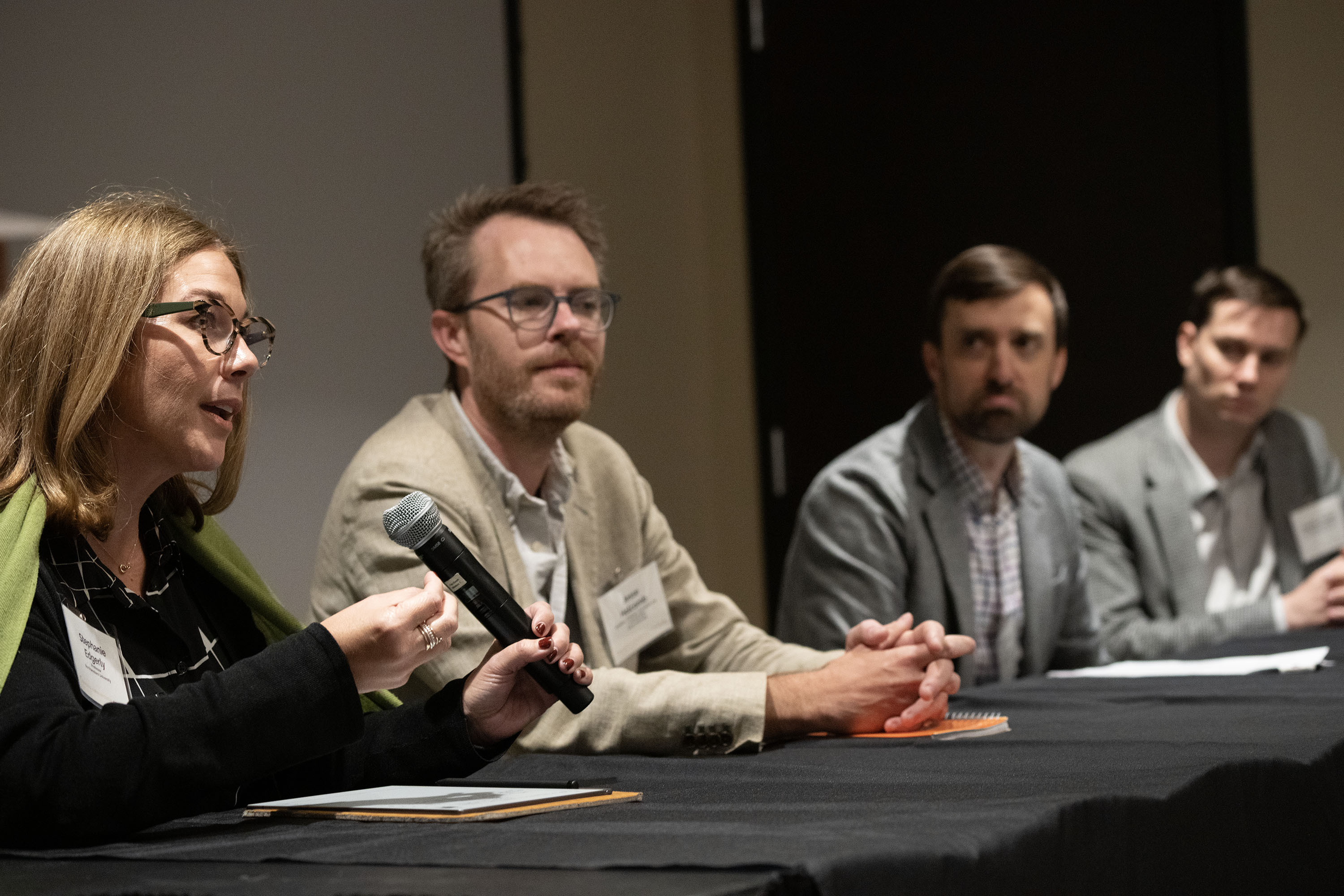
Professors Stephanie Edgerly from Northwestern University and Jesse Holcomb from Calvin College each described their previous research efforts in partnership with news organizations and foundations to better understand the changing ways local audiences engage with news and information.
While Edgerly discussed recent research conducted in Chicago, Holcomb talked about applying lessons from political polling to the study of media and questioned the normative value of some common practices, including the horse-race equivalent of brand-level popularity rankings.
Michael Lipka, Associate Director for News and Information Research at the Pew Research Center, highlighted common challenges in local opinion research where high costs must be balanced with their potential to provide valuable insights, noting that when Pew conducted a large-scale survey on local news in 2018, in many cases patterns were so similar across communities even as locally specific concerns were often difficult to capture with standardized questions.
Andrew Trexler, an Assistant Professor of political science at the University of Wisconsin-Madison, rounded out the panel, highlighting his own research showing the degree to which politically engaged and disengaged audiences often differ in terms of what kinds of content they are most interested in. The latter groups are often more interested in civic information than news organizations often assume in part because the browsing behaviors of highly politically involved individuals tend to dominate newsroom analytics.
During the lunch hour, two additional presentations were featured virtually. Symposium attendees heard first from David Lazer, a Northeastern University professor who leads the Civic Health and Institutions Project known as CHIP50, a collaborative initiative to field state-level representatives surveys in all fifty states. Kang-Xing (“KX”) Jin, from Civic News Company, and Mike Greenfield, from Embold Research, also presented on their work together leading what they have called the Civic News Information Census, an effort to collect systematic data on local information needs around the US.
The final roundtable of the day turned the focus back toward Minnesota and examined the status of current and future efforts around conducting opinion research in the state.
Echoing a point raised by Lipka during the second panel, Matt DeLong, audience editor at the Minnesota Star Tribune, discussed financial challenges around continuing to field the Minnesota Poll, which often necessitates making difficult trade-offs around how frequently to field polls and the limited number of questions that can be included.
In Minnesota, the last such poll was conducted earlier this year in partnership with the Hubbard School of Journalism and Mass Communication and examined attitudes about the Trump administration’s policies, statewide officeholders, and contemporary media habits.
DeLong also talked about unique journalistic opportunities the Minnesota Poll has afforded such as examining public perceptions of race relations among both Black and white residents of Minneapolis following the murder of George Floyd in 2020.

Susan Sherr, from the survey firm SSRS, discussed her organization’s efforts in partnership with the School of Public Health and the Minnesota Department of Health to field the Minnesota Health Access Survey, a large sample survey dating back to 1990 that tracks information on how people access health care and health insurance coverage in Minnesota. Sherr noted that polling in Minnesota poses particular challenges given its “more homogeneous” population, which SSRS addresses in part through careful sample stratification and statistical modeling, which allows researchers to ensure balanced representation across different segments of the population.
Finally, Jens Manuel Krogstad, formerly with the Pew Research Center and now Lumaris Research, discussed his firm’s newly launched efforts at building a Minnesota survey panel, the Minnesota Community Survey, which seeks to make high-quality state-level survey data accessible to more organizations and individual researchers.
Although the final symposium in the ICW series concludes our celebration of the Eighty Years of the Minnesota Poll, assembled participants forged connections across organizations and departments both within the University of Minnesota and beyond, which we hope will spur future interdisciplinary collaboration over the next several decades to follow.

About the Minnesota Journalism Center
We support more vibrant, equitable and sustainable news ecosystem in Minnesota through educational initiatives, applied research and engagement with journalists and newsrooms across the state.
Events
We host and share events focused on connecting working journalists to resources, training, research findings, students — and each other — throughout the year. Join us.
Stay connected
Stay informed about our events, research initiatives and how you can get involved. Sign up for our newsletter.
Support the MJC
Appreciate our work? Here's how to donate.